A new fence is one of the bigger outdoor spends most Melbourne homeowners will make, and it’s something you’ll look at every day for the next couple of decades. When the time comes, the choice nearly always comes down to two options: a Colorbond steel fence or a traditional timber paling fence.
Both are everywhere across Melbourne, from new estates in the west and north to leafy older streets in the east, and both are popular for good reasons. But they perform very differently over time, and the right choice depends on your budget, your block, your neighbour and the look you want.
This guide compares the two side by side on cost, lifespan, maintenance, appearance, privacy, bushfire safety and the rules around dividing fences in Victoria, so you can make the call with confidence.
Short answer: Colorbond usually wins on long-term value, low maintenance and fire resistance. Timber paling usually wins on natural looks, flexibility and ease of repair, and can be slightly cheaper up front. The “better” fence is the one that matches your priorities, and the rest of this article will help you work out which that is.
What Is a Colorbond Fence?
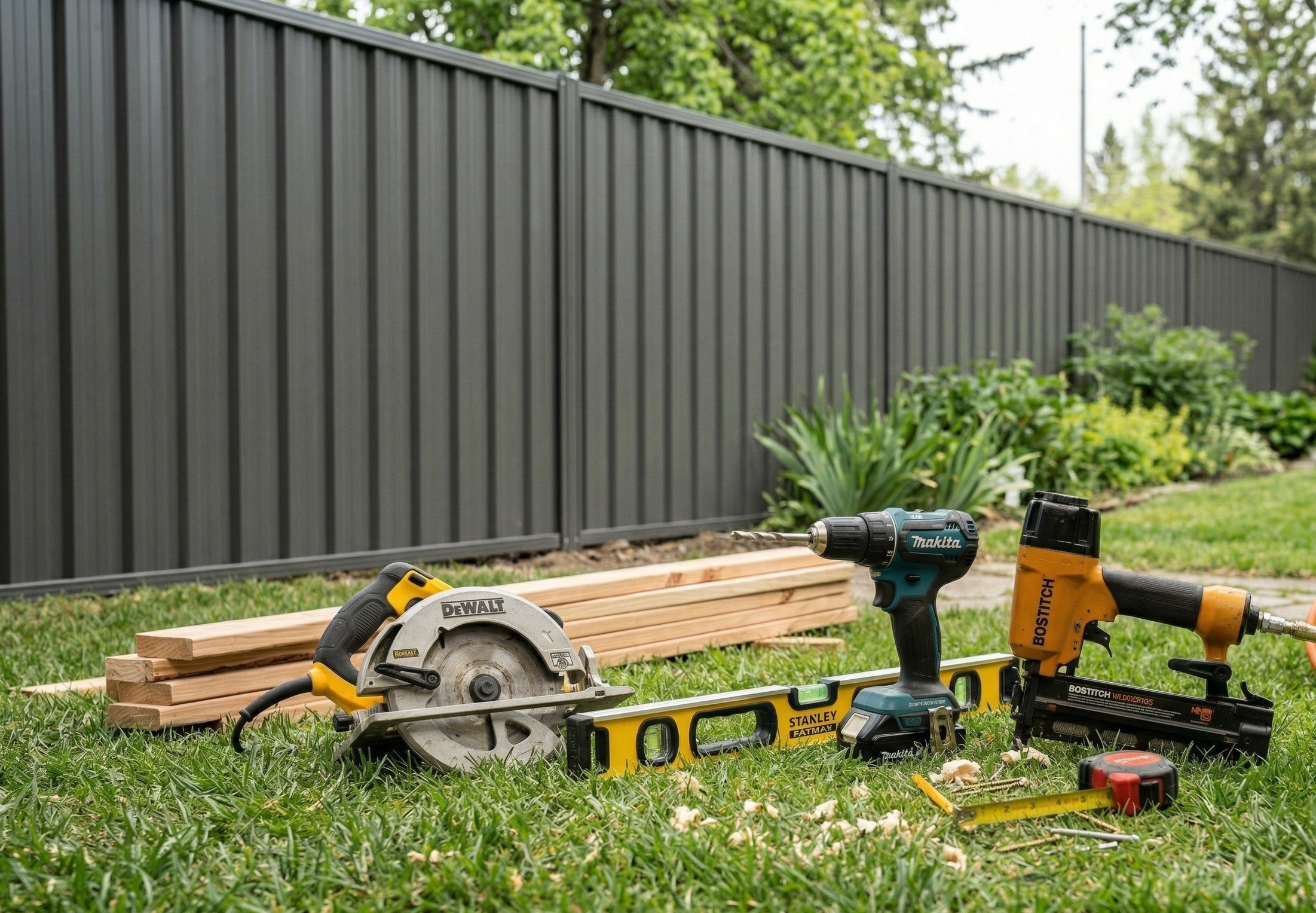
A Colorbond fence is made from pre-painted steel sheeting produced by BlueScope, fixed between steel posts and top and bottom rails. The sheets come in a set range of factory colours, with popular choices in Melbourne including Monument, Basalt, Woodland Grey and Surfmist. Residential fences are most commonly 1.8 m high, with 1.5 m and 2.1 m options also widely used.
What Is a Timber Paling Fence?
A timber paling fence is built from vertical timber boards (palings) nailed to horizontal rails, which are fixed to timber or steel posts. Treated pine is the most common timber in Melbourne, with hardwood used for posts and higher-end builds. Popular styles include:
- Standard paling – palings butted side by side on one face of the rails.
- Lapped and capped – overlapping palings with a timber capping along the top for extra privacy and a more finished look.
- Exposed post – posts visible on the face of the fence for a traditional look.
- With plinth – a timber sleeper along the base to keep palings clear of the soil and help retain garden beds.
Cost: Which Is Cheaper in Melbourne?
On price per metre, the two are closer than most people expect. As a guide for 2026, a standard 1.8 m Colorbond fence in Melbourne typically costs around $130–$180 per metre installed on a flat, accessible site. For a detailed breakdown by height, add-ons and worked examples, see this guide to Colorbond fence costing in Melbourne.
A treated pine paling fence of the same height generally falls in a similar or slightly lower band, roughly $110–$200 per metre depending on the style, timber grade and whether you add capping or a plinth. This breakdown of timber paling fencing price in Melbourne explains how the different styles compare.
Whichever material you choose, the same factors push the price up or down:
- Height and length – taller fences need longer posts and more material; longer runs usually get a better per-metre rate.
- Slope – sloping blocks need stepped or raked panels and more labour.
- Soil and rock – Melbourne’s reactive clay and rocky ground in parts of the east and north can slow post-hole digging.
- Old fence removal – taking away an old fence and disposing of it adds to the job.
- Access – narrow side paths, pools or garden beds along the fence line all add time.
The bigger difference shows up over time. Timber needs staining or painting every few years and palings, rails and posts eventually need replacing. Colorbond needs little more than an occasional hose down. Over a 20-year period, the lower upkeep of steel often cancels out any up-front saving on timber.
Tip: when comparing quotes, check each one includes the same height, post spacing, footing depth, removal of the old fence and GST, so you’re comparing like with like.
Durability and Lifespan
Colorbond
A professionally installed Colorbond fence commonly lasts 20–30 years or more in Melbourne conditions. Steel doesn’t rot, warp, split or attract termites, and genuine BlueScope sheeting comes with a manufacturer warranty (check the current terms for your product and location). The main weak points are scratches that expose bare steel and posts that weren’t set properly in the first place.
Timber Paling
A timber paling fence typically lasts 10–20 years, depending heavily on timber quality, treatment, ground conditions and maintenance. Over time palings can shrink, warp, split and fade, rails can sag and posts can rot where they meet the soil. Termites are also a real risk in parts of Melbourne and can quietly weaken timber posts from the inside.
Melbourne’s Weather
Melbourne’s famous “four seasons in one day” is hard on fencing. Wet winters, hot dry summers and constant wetting and drying cycles speed up the ageing of timber. In bayside suburbs, salt air adds another factor, so if you’re near the coast, ask your installer about which Colorbond products and fixings are suited to marine environments.
Maintenance
Colorbond is about as low-maintenance as fencing gets. Hose it down now and then to remove dirt and salt, keep garden soil and mulch from building up against the base, and touch up any deep scratches. There’s no painting or staining required.
Timber paling fences need more attention to stay looking good and last their full life. Expect to:
- Stain, oil or paint every two to four years to protect against weather.
- Replace broken, split or warped palings as they appear.
- Check posts for rot or termite damage, especially at ground level.
- Re-nail loose palings and tighten rails.
If you enjoy weekend DIY, that upkeep may not bother you. If you’d rather never think about your fence again, Colorbond has the clear advantage.
Appearance and Style
Colorbond gives a clean, modern and uniform look. Many homeowners match the fence colour to their roof, gutters or window frames for a cohesive finish, and darker colours like Monument and Basalt are especially popular with contemporary Melbourne homes.
Timber offers warmth and a natural character that steel can’t replicate. It suits period homes, Californian bungalows and leafy suburbs, and it blends easily into gardens. Timber can also be stained or painted any colour you like and re-finished later if your taste changes.
Before you decide, check whether your property is covered by a heritage overlay or estate design guidelines. Some councils and new estates have rules about fence materials, colours or heights, particularly for front fences and fences visible from the street.
Privacy, Noise and Security
At standard heights, both fences give full privacy when first installed. Over time, however, timber palings shrink and warp, which can open up small gaps. Lapped and capped timber fences reduce this problem. Colorbond sheets interlock and stay gap-free.
For noise, neither is a true acoustic barrier, but both reduce the sense of street noise. Thicker lapped timber fences and solid Colorbond perform reasonably well near busy roads.
On security, both are difficult to see through and, at 1.8 m or higher, reasonably hard to climb. Colorbond offers fewer footholds than a timber fence with exposed rails.
Wind is worth considering too. Both fence types act like a sail in strong gusts, so correct post spacing and properly concreted footings matter far more than the material itself.
Bushfire Safety
If you live on Melbourne’s outer fringe, such as the Dandenong Ranges, Yarra Ranges, Nillumbik or Macedon Ranges, fire performance should be part of your decision.
Steel is non-combustible. Colorbond fencing has been tested for use in bushfire-prone areas when installed to specification, and it won’t carry fire along the boundary towards your home. Timber is combustible and can act as a pathway for fire to reach buildings.
If your property has a Bushfire Attack Level (BAL) rating, check your BAL assessment and the CFA’s guidance on fencing close to buildings before choosing a material.
Environmental Impact
Both materials have environmental pros and cons. Timber is a renewable resource, and choosing sustainably certified timber makes a real difference. However, treated pine contains preservatives and shouldn’t be burnt or mulched when it’s eventually replaced.
Steel takes more energy to produce, but it’s highly recyclable at the end of its life, and a fence that lasts longer means fewer replacements over time. There’s no single “green” winner, so it’s worth weighing up sourcing and lifespan rather than material alone.
Dividing Fences and Your Neighbour
If the fence runs along a boundary, your neighbour has a say. Under Victoria’s Fences Act 1968, adjoining owners generally share the cost of a “sufficient” dividing fence equally. In most Melbourne suburbs, a standard 1.8 m Colorbond or timber paling fence is likely to be considered sufficient.
Material choice is one of the most common causes of neighbour disagreements. A few tips:
- Talk first. Most dividing fences are agreed with a friendly conversation.
- Put it in writing. Agree on the material, height, colour, location, cost and builder before work starts.
- Use a Fencing Notice if you want a formal agreement. The Victorian Government’s fencing information explains the process.
- Extras are usually on you. If you want something beyond a sufficient fence, such as extra height or a premium finish, you’ll normally pay the difference.
If you can’t reach agreement, the Dispute Settlement Centre of Victoria offers free help before anything needs to go to court.
Colorbond vs Timber Paling at a Glance
| Factor | Colorbond | Timber Paling |
|---|---|---|
| Upfront cost (1.8 m, installed) | Around $130–$180 per metre | Around $110–$200 per metre, depending on style |
| Typical lifespan | 20–30+ years | 10–20 years |
| Maintenance | Very low: occasional wash | Regular staining or painting, repairs |
| Look | Clean, modern, uniform | Natural, warm, traditional |
| Termites and rot | Not affected | Vulnerable over time |
| Bushfire performance | Non-combustible | Combustible |
| Privacy over time | Stays gap-free | Gaps can open as palings shrink |
| Repairs | Replace whole sheets | Easy to replace single palings |
| Best suited to | Modern homes, low-maintenance owners, bushfire-prone areas | Period homes, garden settings, owners who like a natural look |
So, Which Is Better?
There’s no single winner. It depends on what matters most to you.
Choose Colorbond if you want:
- A fence you can largely forget about for decades
- Better long-term value
- A modern look that matches your roof or trims
- Protection from termites and rot
- Better fire performance in a bushfire-prone area
Choose timber paling if you want:
- A warm, natural look, especially for a period home or garden setting
- A potentially lower up-front cost
- The freedom to paint or stain any colour
- Simple DIY repairs, one paling at a time
You don’t always have to pick one. Hybrid options are increasingly popular in Melbourne, such as Colorbond fences with a timber slat or lattice topper, or timber paling fences built on steel posts for better durability at ground level.
Final Thoughts
Colorbond and timber paling are both solid choices for a Melbourne home. Colorbond trades a little character for durability, low maintenance and fire resistance, while timber offers natural warmth and flexibility in exchange for more upkeep and a shorter life.
Before you commit, check any heritage or estate rules, agree on the material with your neighbour if it’s a dividing fence, and get at least two or three written quotes from experienced Melbourne fence contractors who will inspect the site in person. Slope, soil and access can change a price significantly, and a proper site visit is the only way to get an accurate figure.
Frequently Asked Questions
How long does a Colorbond fence last in Melbourne?
A professionally installed Colorbond fence typically lasts 20–30 years or more in Melbourne conditions, with very little maintenance.
How long does a timber paling fence last?
Usually 10–20 years, depending on the timber, how well it was installed and how regularly it’s maintained. Posts in contact with soil are often the first part to fail.
Is Colorbond more expensive than timber?
Up front, the prices are similar, and timber can be slightly cheaper for basic styles. Over 20 years, Colorbond is usually the cheaper option because it needs far less maintenance and replacement.
Can I paint a timber paling fence to match my house?
Yes. Timber can be painted or stained any colour, which is one of its biggest advantages. Just remember that painted timber will need re-coating every few years.
Who pays for a dividing fence in Victoria?
Under the Fences Act 1968, neighbours generally split the cost of a sufficient dividing fence equally. Anything beyond a sufficient fence is usually paid for by the owner who wants it.