When homeowners think about improving their property, they usually picture a kitchen remodel, fresh paint, or a new roof. Trees rarely make the list. Yet mature, well-kept trees are one of the most valuable and most overlooked features of a Florida home. They boost curb appeal, cut cooling costs, and can add real dollars to your property value. Neglected or poorly maintained, those same trees can just as easily drag your value down and put your home at risk.
Treating tree care as part of your home improvement plan, rather than an afterthought, is one of the smartest moves a Florida homeowner can make. Here is why it matters and how to do it right.
Trees Are an Asset, Not Just Scenery
Healthy, mature trees are consistently linked to higher property values and faster home sales. A shaded, tree-lined lot simply looks more established and cared for than a bare one, and buyers notice. In Florida’s climate, that shade is more than cosmetic: a well-placed canopy can noticeably reduce the amount of sun hitting your roof and walls, which eases the load on your air conditioning through our long, hot summers.
The catch is that this value only holds when the trees are healthy and well maintained, which is where regular, professional tree care from a certified local team earns its keep. An overgrown, lopsided, or clearly neglected tree sends the opposite signal. It reads as deferred maintenance, and it can make a buyer wonder what else on the property has been ignored.
The Hidden Cost of Neglect
A tree left to its own devices in Florida does not stay the same. Our growing season is long and aggressive, so canopies get dense, limbs get heavy, and deadwood accumulates faster than most homeowners expect. Add hurricane season on top of that, and a neglected tree becomes a genuine liability.
The risks are not abstract. A heavy, unbalanced limb over your roof, roots creeping into a foundation or driveway, or a storm-weakened trunk near a power line can all turn into expensive repairs, insurance headaches, or worse. Preventive care is almost always cheaper than the emergency and repair costs that follow a failure. This is one area of home maintenance where waiting rarely saves money.
Match the Work to the Tree
Good tree care is not about cutting for the sake of cutting. Different trees and different problems call for different work, and doing the wrong thing can weaken a tree instead of helping it.
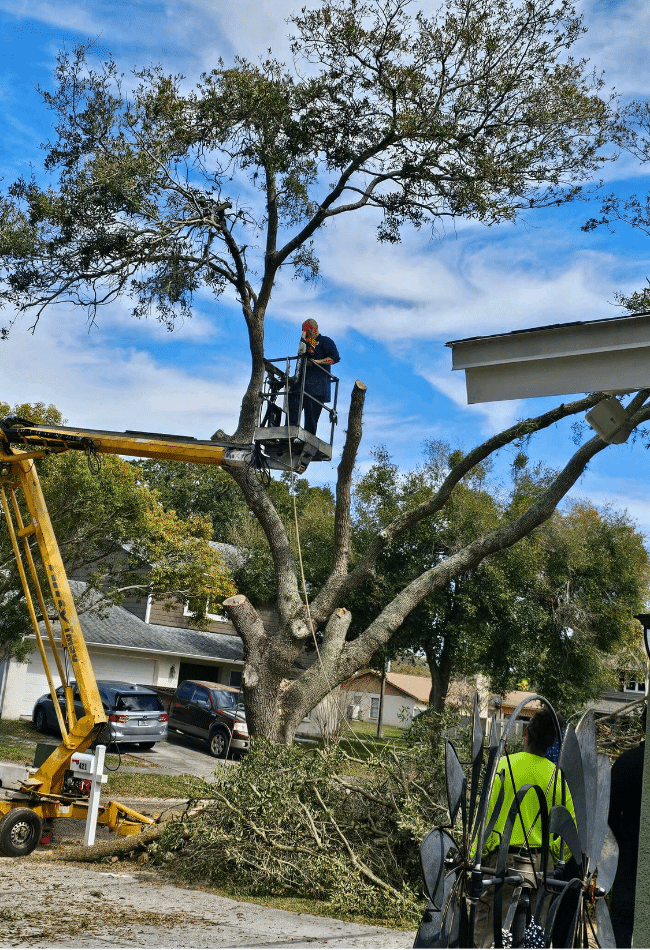
Routine structural pruning keeps a canopy balanced, removes deadwood, and reduces the wind load that makes trees dangerous in a storm. Crown thinning lets light and air move through the canopy without harming the tree’s natural shape. Cabling and bracing can support a tree with a weak branch union so it can stay standing safely. Because getting this balance right takes training, many homeowners bring in a professional rather than guessing, so the work is matched to what each tree actually needs, which protects both the tree and the investment it represents in your property.
Know When to Call a Professional
Light trimming of small, low branches is reasonable for a hands-on homeowner. But there is a clear line where tree work stops being a weekend project and becomes a job for insured professionals with the right equipment and training.
Call in a pro when:
- A tree is near your house, driveway, fence, or power lines.
- The job requires a ladder or a chainsaw used overhead.
- You see signs of trouble such as a new lean, large deadwood, cracks in the trunk, fungus at the base, or exposed or damaged roots.
- A tree has been damaged in a storm and may be unstable.
- You are unsure whether a tree needs pruning, treatment, or removal.
A qualified arborist can also tell you when a tree does not need to come down at all, which saves you from paying for an unnecessary removal.
Build Tree Care Into Your Home Maintenance Routine
The homeowners who get the most value from their trees treat them like any other part of the property that needs upkeep. A few simple habits go a long way:
- Inspect your trees a couple of times a year, looking for deadwood, leaning, or damage, and deal with small issues before they grow.
- Schedule structural pruning during the calmer months, well before hurricane season peaks, when professionals are easier to book.
- Mulch correctly, keeping a wide, shallow ring around the base and pulling it back from the trunk so the root flare stays dry.
- Water deeply during dry spells, especially for younger trees still establishing roots in Florida’s sandy soil.
- Plan around mature size when planting anything new, so today’s sapling does not become tomorrow’s hazard against your roof or foundation.
The Bottom Line
Trees deserve a place in your home improvement thinking right alongside your roof, your HVAC, and your exterior. Cared for properly, they raise your curb appeal, lower your cooling bills, and add lasting value to your property. Ignored, they slowly become a cost and a risk. The homeowners who come out ahead are the ones who maintain their trees steadily and bring in a certified professional when the job calls for it, rather than waiting until a storm forces the decision.
A little attention now keeps your trees working for your home instead of against it.