- As the UK moves steadily toward its target of Net Zero emissions by 2050, the way we heat our homes and businesses is undergoing a radical transformation. With the phase-out of traditional gas and oil boilers on the horizon, many property owners are looking for sustainable, carbon-neutral alternatives.
- Among the most robust solutions is the biomass boiler. Unlike heat pumps, which rely on electricity and ambient air or ground temperatures, biomass boilers offer a high-temperature heating solution that feels familiar to those used to traditional combustion-based systems.
- In this comprehensive guide, we will explore what a biomass boiler is, the intricate technology behind how it works, the various fuel types available, and where this technology fits within the UK’s unique energy landscape.
What Is a Biomass Boiler?
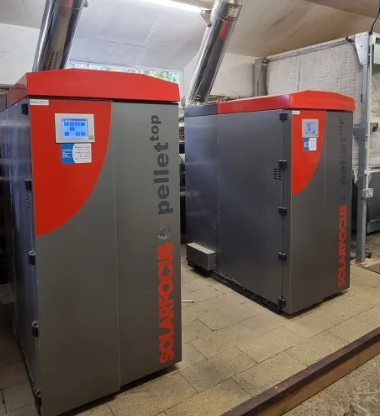
- At its simplest, a biomass boiler is a heating system that burns organic materials—such as wood pellets, chips, or logs—to provide central heating and hot water. While it may sound like a glorified wood-burning stove, modern biomass boilers are highly sophisticated, computer-controlled machines designed for maximum efficiency and minimal environmental impact.
- The fundamental difference between a biomass boiler and a fossil fuel boiler lies in the fuel source. Gas and oil boilers burn “sequestered” carbon—carbon that has been trapped underground for millions of years. When burned, this adds “new” CO2 to the atmosphere.
- Biomass, conversely, is considered carbon neutral. The carbon dioxide released during combustion is roughly equal to the amount the plant absorbed while it was growing. As long as new trees or crops are planted to replace those harvested, the cycle remains sustainable.
How Does a Biomass Boiler Work?
- Understanding the inner workings of a biomass boiler reveals why it is such an effective alternative to gas. While the fuel is solid rather than liquid or gas, the output—hot water for radiators and taps—is identical.
- Fuel Delivery
- The process begins with the fuel. In manual systems (usually log boilers), the user must hand-load the wood. However, most modern domestic systems are automated. These systems use a “hopper” (a large storage container). An auger—a motorized screw-like device—automatically transports the wood pellets or chips from the hopper into the combustion chamber at a controlled rate based on the heating demand.
- Combustion
- Once the fuel reaches the combustion chamber, an electric igniter starts the fire. The boiler’s internal computer regulates the amount of air (oxygen) and fuel to ensure the most efficient burn possible. Modern boilers use “gasification” techniques, where the wood is heated to a point where it releases volatile gases, which are then burned at extremely high temperatures (often exceeding 1,000°C). This ensures that almost all the fuel is converted into energy, leaving very little waste.
- Heat Exchange
- The intense heat generated in the combustion chamber passes through a heat exchanger. This component consists of pipes filled with water. As the hot gases flow around these pipes, the heat is transferred to the water. The cooled exhaust gases are then vented out through a flue (chimney).
- The Thermal Store (Accumulator Tank)
- One of the most critical components of a biomass system is the thermal store. Unlike a gas boiler that can modulate its flame up and down instantly, biomass boilers work best when they burn at a steady, high temperature.
- The thermal store is a large, heavily insulated water tank. The boiler heats the water in this tank, and the building draws heat from the tank as needed. This allows the boiler to run for a few hours at peak efficiency to “charge” the tank, rather than switching on and off constantly, which would be inefficient and increase wear and tear.
- Ash Removal and Cleaning
- Because biomass is a solid fuel, it produces ash. However, because the combustion is so efficient, the volume of ash is surprisingly low (typically about 0.5% to 1% of the fuel volume). Many high-end biomass boilers feature self-cleaning heat exchangers and automated ash compression systems, meaning the user only needs to empty an ash bin a few times a year.
Fuel Types: What Powers a Biomass Boiler?
- The choice of fuel is a deciding factor in the size of the boiler and the amount of physical labor required. There are three primary types of biomass fuel used in the UK:
- Wood Pellets
- Wood pellets are the most popular choice for domestic installations. They are made from compressed sawdust and wood shavings, often a byproduct of the sawmill industry.
- Pros: High energy density, uniform shape (perfect for automated feeding), and easy to store in bags or bulk silos.
- Cons: More expensive than logs or chips due to the manufacturing process.
- Wood Chips
- Wood chips are logs that have been shredded into small pieces. These are typically used in larger properties, such as farms, estates, or commercial buildings.
- Pros: Significantly cheaper than pellets, especially if the owner has a local wood source.
- Cons: Requires a much larger storage area and a more robust auger system, as chips are less uniform than pellets.
- Logs
- Log-burning boilers are the most traditional. They require the user to manually load the boiler once or twice a day.
- Pros: Cheapest fuel source; ideal for those with access to free or low-cost timber.
- Cons: Labour-intensive; requires a large thermal store to hold the energy from a single large burn.
Biomass Boilers in the UK: The Policy and Economic Landscape
- The UK heating market is currently in a state of flux. With the government’s Boiler Upgrade Scheme (BUS) providing substantial grants for renewable heating, many are weighing up biomass against heat pumps.
Where Biomass Fits
- While air source heat pumps are the “go-to” recommendation for modern, well-insulated urban homes, the biomass boiler occupies a vital niche:
- Off-Grid Properties: There are millions of homes in the UK not connected to the gas grid. For these properties, which traditionally relied on expensive and carbon-intensive oil or LPG, biomass is a game-changer.
- Period Properties: Older UK homes often have poor insulation and small radiators. Heat pumps, which operate at lower temperatures, may struggle to keep these homes warm. A biomass boiler provides the high-temperature water (60-80°C) that traditional radiator systems were designed for.
- Large-Scale Heating: For district heating schemes or large rural estates, biomass is often more cost-effective than installing multiple heat pump units.
Government Incentives
- As of 2024, the UK government offers a £5,000 grant toward the installation of a biomass boiler through the Boiler Upgrade Scheme, provided the property is in a rural location and not connected to the gas grid. This is intended to offset the higher upfront cost of the equipment compared to a standard gas boiler.
The Sustainability Question
- The UK has strict standards regarding biomass. To be truly sustainable, the fuel must be sourced responsibly. The Biomass Suppliers List (BSL) is a register of fuel that meets the government’s eligibility criteria for sustainability. Using BSL-certified fuel ensures that the wood isn’t coming from ancient forests but from managed woodlands where harvesting is balanced by replanting.
Pros and Cons of a Biomass Boiler
- Before investing in a biomass boiler, it is essential to weigh the advantages against the practical requirements.
The Advantages
- Carbon Neutrality: A significant reduction in your carbon footprint compared to oil or gas.
- Fuel Price Stability: While gas prices fluctuate wildly due to global geopolitics, wood fuel prices—particularly in the UK—tend to be more stable.
- High Efficiency: Modern boilers operate at 90% efficiency or higher.
- Waste Management: In a circular economy, using wood waste to heat homes is an excellent use of resources.
The Disadvantages
- Space Requirements: This is the biggest hurdle. You need space for the boiler itself, a large thermal store, and a dry area to store several tonnes of fuel.
- Upfront Cost: A domestic biomass system can cost between £10,000 and £20,000 including installation—significantly more than a £2,500 gas boiler.
- Maintenance: Even automated systems require more “hand-holding” than gas boilers, including regular ash removal and annual professional servicing.
- Air Quality: While CO2 neutral, burning wood releases particulates (PM2.5). In the UK, you must ensure your boiler is DEFRA exempt if you live in a Smoke Control Area.
Is a Biomass Boiler Right for You?
- Choosing a biomass boiler depends largely on your property and lifestyle. If you live in a terraced house in London with no garden, a biomass boiler is likely impractical due to the delivery and storage requirements of the fuel.
- However, if you own a larger, detached property in a rural area, particularly one currently heated by oil, a biomass boiler is one of the best investments you can make. It offers a powerful, reliable heat source that can handle the coldest British winters while shielding you from the volatility of fossil fuel markets.
Key Considerations for Installation:
- Access: Can a delivery truck get close enough to your fuel store?
- Flue Requirements: Biomass boilers need a specific type of flue to safely vent exhaust gases, which may require planning permission in some areas.
- Fuel Quality: Using wet or “green” wood will damage the boiler and significantly reduce efficiency. Always use “Ready to Burn” certified fuel.
Conclusion
- The biomass boiler represents a sophisticated bridge between traditional heating methods and a high-tech, sustainable future. By harnessing the natural energy stored in organic matter, we can heat our homes comfortably without contributing to the atmospheric carbon crisis.
- In the UK’s quest for Net Zero, there is no “one size fits all” solution. While heat pumps will dominate the suburbs, the biomass boiler remains the king of rural, off-grid, and large-scale heating. As technology continues to improve and the infrastructure for sustainable wood fuel expands, biomass will undoubtedly remain a cornerstone of the UK’s renewable energy strategy.
- Investing in a biomass boiler is more than just a heating upgrade; it is a commitment to a localized, sustainable energy economy that respects the natural carbon cycle. For the right property, it is a clean, green, and powerful way to stay warm.