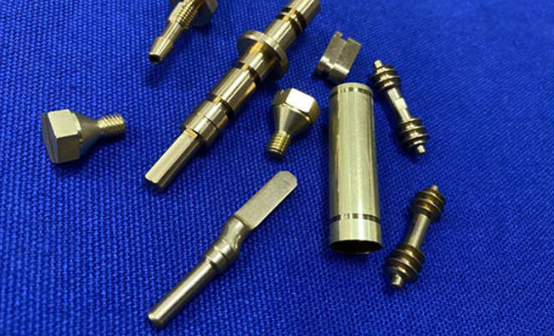
If you have been following industrial trends over the past few years, you have probably noticed something shifting. The materials that once played supporting roles in manufacturing are now taking center stage. Copper and brass—long valued for their conductivity and corrosion resistance—are suddenly in high demand across sectors that barely touched them a decade ago. Electric vehicles, renewable energy systems, data centers, and advanced medical devices all rely on these alloys in ways that are reshaping supply chains and forcing precision machining shops to rethink their capabilities.
The numbers tell part of the story. Copper content in electric vehicles is significantly higher than in internal combustion vehicles—the wiring, busbars, motor windings, and battery connections all depend on it. Renewable energy infrastructure, from solar farms to wind turbines, consumes copper at scale. Data centers, expanding rapidly to support AI and cloud computing, require extensive copper cabling and connectors. And brass, with its excellent machinability and corrosion resistance, remains the material of choice for fluid systems, pneumatic fittings, and electronic connectors across industries.
But material availability is only half the equation. The other half is the ability to machine these alloys to exacting specifications. Copper is notoriously difficult to cut—it is gummy, tends to smear rather than shear cleanly, and produces long, stringy chips that can wrap around tools and disrupt automated cycles. Brass, while more forgiving, still demands sharp tooling, proper chip evacuation, and precise coolant application to achieve clean surfaces and tight tolerances. A poorly machined copper connector can develop high resistance and fail under load. A rough brass fitting can compromise a fluid system. The margin for error is shrinking.
Why Material Expertise Separates the Best from the Rest
For procurement professionals and engineering teams, the implications are clear. The shops that understand how copper and brass behave under cutting conditions—and have documented processes to handle them consistently—are becoming indispensable partners. This is not about having the latest CNC equipment alone. It is about accumulated knowledge: knowing which tool geometries work for different copper alloys, understanding how feed rates affect surface finish on brass, and maintaining quality systems that catch variation before it becomes a problem.
Many shops treat brass and copper as afterthoughts, focusing their process development on stainless steel or aluminum. But as demand for these materials accelerates, that approach is becoming a liability. Companies that source brass and copper components are increasingly looking for a reliable machining service for brass and copper components—one that has already solved the challenges that catch less experienced manufacturers off guard.
The Shift in Supply Chain Strategy
The broader manufacturing environment is amplifying these material trends. Regionalization and reshoring are not short-term adjustments but long-term structural changes. Companies are moving production closer to end markets to reduce lead times, mitigate geopolitical risk, and gain better control over quality. In the United States, reshoring activity has accelerated, with manufacturers across sectors bringing operations back from distant low-cost regions.
This shift creates both opportunity and pressure. Domestic capacity for high-precision machining is not unlimited, and the shops that have invested in specialized equipment and skilled workforces are operating at capacity. For buyers, this means evaluating potential partners more carefully. Equipment lists matter, but so do documented material processes, quality certifications, and the ability to scale production without sacrificing tolerances.
Practical Considerations for Brass and Copper Components
When sourcing precision-machined brass and copper parts, several factors deserve attention. First, material certification and traceability are essential—especially for components used in medical, aerospace, or fluid power applications. Second, surface finish requirements are often more demanding than they appear; a rough surface on a copper connector can affect electrical performance, while a poor finish on a brass fitting can compromise sealing. Third, secondary operations such as deburring, passivation, or plating may be required, and the shop’s capability in these areas should be verified.
For components that require complex geometries or tight tolerances, Swiss-type turning is often the best approach. Originally developed for watchmaking, Swiss machines support the workpiece immediately adjacent to the cutting tool, eliminating deflection and enabling precision that conventional lathes cannot match. This capability is particularly valuable for small-diameter brass and copper parts where concentricity and surface finish are critical.
Experienced shops maintain comprehensive process libraries for these materials, with documented parameters for different alloys and part geometries. They invest in tooling designed specifically for non-ferrous materials and train operators in the nuances of copper and brass machining. This is the kind of capability that makes a reliable provider for custom brass turned parts stand out in a crowded field.
Looking Ahead
The demand for precision-machined brass and copper components is not going to decrease. Electrification, renewable energy, and the continued expansion of data infrastructure will drive consumption for years to come. At the same time, the supply of skilled machinists remains constrained, and the shops that have invested in training and process development will be the ones best positioned to capture the most demanding work.
For companies that rely on these components, the message is straightforward: treat material expertise as a strategic priority. The lowest-quoted supplier is rarely the lowest-cost supplier when scrap rates, rework, and delivery delays are factored in. Instead, look for shops with documented experience in the specific alloys you use, robust quality systems, and the ability to scale production without compromising tolerances.
The manufacturing landscape has changed, and the materials that power modern technology are at the center of that transformation. Brass and copper are no longer secondary materials—they are critical enablers of electrification, connectivity, and industrial progress. And the shops that have mastered them are the ones leading the way. For engineers and procurement teams seeking a comprehensive guide to CNC machining of brass parts, the value of working with a partner who understands these materials inside out cannot be overstated.