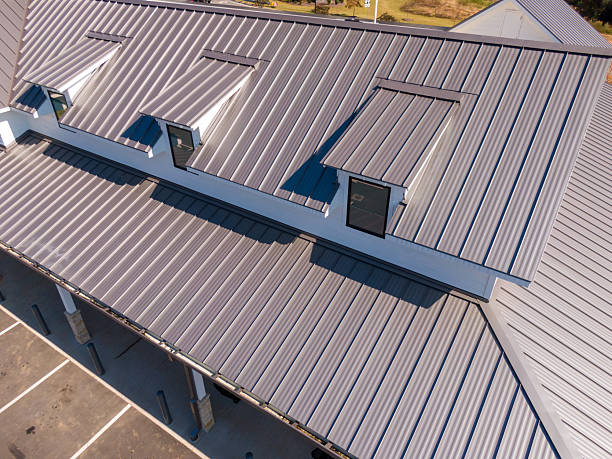
Most commercial reroof conversations start with membrane type, insulation R-value, and warranty term. Disposal rarely comes up until the invoice lands, and by then the number is fixed. On a 20,000 square foot low-slope roof with two or three layers of built-up gravel roofing on top, tear-off waste can run into hundreds of tons. That tonnage has to leave the site, cross a scale, and get paid for at the landfill gate.
Property managers who have only ever handled residential shingle jobs are used to disposal being a line item nobody argues about. Commercial roofing is a different scale of problem. A bid that looks ten or fifteen percent cheaper than the others sometimes got there by under-counting what is actually on the deck. This article walks through what drives disposal cost, what can be diverted from landfill, and what to ask before you compare numbers.
Why Disposal Is a Real Budget Line, Not an Afterthought
A single-ply membrane roof installed fifteen years ago and never recovered is a light removal: one layer, mechanically fastened or adhered, maybe a cover board underneath. A built-up roof with gravel surfacing that has been recovered once or twice over forty years is a different job entirely. Each recover layer adds thickness, weight, and fasteners. Gravel ballast alone can weigh several pounds per square foot before you have removed a single membrane sheet.
On a large low-slope commercial roof, the difference between a light single-layer tear-off and a heavy multi-layer gravel assembly can be a factor of three or four in disposal tonnage. That difference shows up directly in bin count, truck trips, and landfill tipping fees. A contractor who does not know how many layers are on the deck before bidding is guessing at one of the largest variable costs in the project.
What Determines the Tonnage
Layer count is the biggest variable. Alberta Building Code allows roof recovers under specific conditions, which means older commercial buildings in Calgary often carry two or even three roof assemblies stacked on the same deck. Each recover was a legitimate decision at the time. Combined, they are a heavier tear-off than most owners expect.
Assembly type matters almost as much. Built-up roofing with gravel surfacing is the heaviest common assembly on Calgary commercial stock. Modified bitumen with a mineral cap is lighter but still substantial. Single-ply membrane, whether mechanically fastened or fully adhered, is the lightest to remove per square foot. Insulation condition adds a wildcard: saturated polyiso or fiberboard holds water weight that dry insulation does not, and a roof with a history of leaks often has waterlogged insulation across a meaningful percentage of the field.
- Number of existing roof layers on the deck
- Assembly type: built-up gravel, modified bitumen, single-ply, or a mixed history
- Insulation condition and moisture saturation
- Total roof area and deck accessibility
- Presence of ballast, pavers, or rooftop equipment curbs requiring extra handling
Bin Logistics on a Tight Calgary Commercial Lot
Disposal cost is not only what the landfill charges per ton. It is also how efficiently material moves from the roof to the bin to the truck. A commercial building in a dense Calgary industrial park or a downtown block often has limited staging area: a shared loading dock, a parking lot that cannot be fully closed during business hours, or a lane too narrow for a standard roll-off truck to maneuver.
Crews plan bin placement and swing-out access before the first layer comes off, not on the fly. On sites with restricted access, that can mean smaller bins swapped more frequently instead of one large bin sitting for the full job, which changes the cost structure. It can also mean a conveyor or chute system to move debris from roof level to grade without carrying it through an occupied lobby or across a tenant parking area. None of this is exotic, but it has to be priced into the bid, and a contractor who has not walked the site with disposal logistics in mind will miss it.
Landfill Tipping and Why Weight Drives Cost
Calgary-area landfills and transfer stations charge by weight, not by volume. This is where gravel-surfaced built-up roofing becomes expensive fast. A truck that would be full by volume with light single-ply debris can hit its legal weight limit well before the box is full when hauling gravel-ballasted material, meaning more truck trips for the same physical footprint of roof.
This is also where an under-bid becomes visible after the fact. A contractor who priced disposal based on square footage alone, without accounting for layer count and assembly weight, either eats the difference in tipping fees or comes back with a change order once the true tonnage is on the scale ticket. Neither outcome is good for the owner’s budget planning.
What Can Be Diverted, and What Cannot
Not everything removed from a commercial roof has to go to landfill. Some regions and facilities accept asphalt shingle and built-up roofing membrane for recycling into road base or other aggregate uses, though availability varies by market and by what the material is contaminated with. Metal flashing, edge trim, and mechanical curbs are routinely scrapped rather than landfilled, which offsets a small portion of disposal cost.
Insulation is generally not a diversion candidate once it has been through years of weather exposure and moisture cycling. Gravel ballast can sometimes be screened and reused as fill on site or elsewhere, which avoids both landfill tipping and the cost of trucking it away entirely, though this depends on gravel condition and whether a use for it exists nearby. A contractor who has not asked these questions locally is leaving cost savings on the table by default.
The honest answer on diversion is that it varies by material, by contamination, and by what regional facilities will accept in a given month. Anyone who promises a fixed diversion percentage before inspecting the roof is guessing.
Contaminated Material Changes the Handling Rules
Older commercial roofs, particularly ones installed before the 1990s, sometimes contain asbestos-containing roofing materials in the felt or mastic layers. This is not universal, but it is common enough in Calgary’s older commercial and industrial stock that a responsible contractor tests before tear-off begins rather than assuming. Alberta OHS regulations govern how suspected asbestos-containing material is handled, and the disposal path for confirmed asbestos material is entirely different from standard construction debris: separate containment, separate hauling, separate landfill acceptance criteria, and higher cost per ton.
If a roof has never been tested and a bidder’s number does not mention testing at all, that is worth asking about directly. Finding asbestos-containing material mid-teardown, after work has started and a bid has been accepted, turns a planned project into a stop-work situation while testing and abatement planning catch up.
What an Owner Should Ask a Bidder to Show
The cleanest way to compare bids on disposal is to ask each contractor to break the number out separately from the rest of the scope, and to explain how they arrived at it. A contractor who has done a roof-core investigation, counted existing layers, and identified assembly type has a defensible number. A contractor who applied a flat per-square-foot disposal rate across every job, regardless of what is actually on the deck, is guessing, and the owner is the one who absorbs the gap if the guess is wrong.
It is reasonable to ask for the estimated tonnage, the disposal facility that will be used, and whether the number includes contingency for a heavier-than-expected assembly discovered once tear-off starts. Commercial roofing contractor services in Calgary can walk through what a core sample from your existing roof shows and what that means for realistic disposal budgeting before a shovel touches the deck.
Budget for What Is Actually on the Roof
Disposal is not the part of a commercial reroof that wins the job on price. It is the part that determines whether the winning bid holds up once the tear-off crew starts pulling material off the deck. An owner who asks for layer count, assembly type, and a tonnage estimate up front is protecting the budget against the most common source of mid-project change orders on a large low-slope roof.
A roof that has been recovered twice with gravel-surfaced built-up assemblies on top is a different disposal problem than a single-layer single-ply membrane, and a bid should reflect which one you actually have, not an average assumption. Get the roof inspected and cored before the tender goes out, not after the low bid comes in looking suspiciously good.
About the author: this article was contributed by Superior Roofing Ltd., a Calgary commercial roofing contractor whose crews include Red Seal journeymen and HAAG Certified inspectors, and who carries authorized-applicator status with SOPREMA, Carlisle, and Duro-Last for large-scale low-slope reroof projects.